
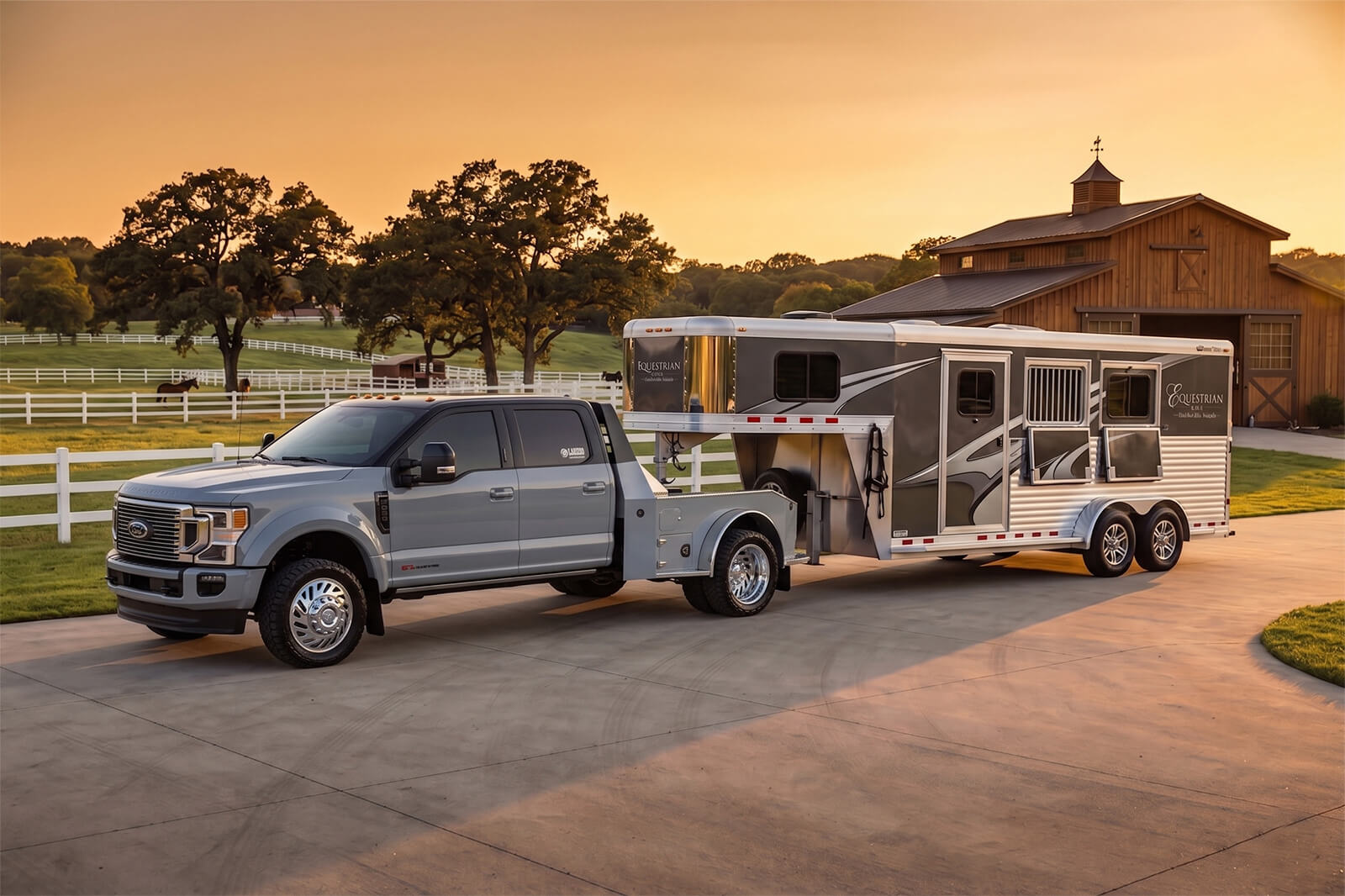
Why This Guide Exists
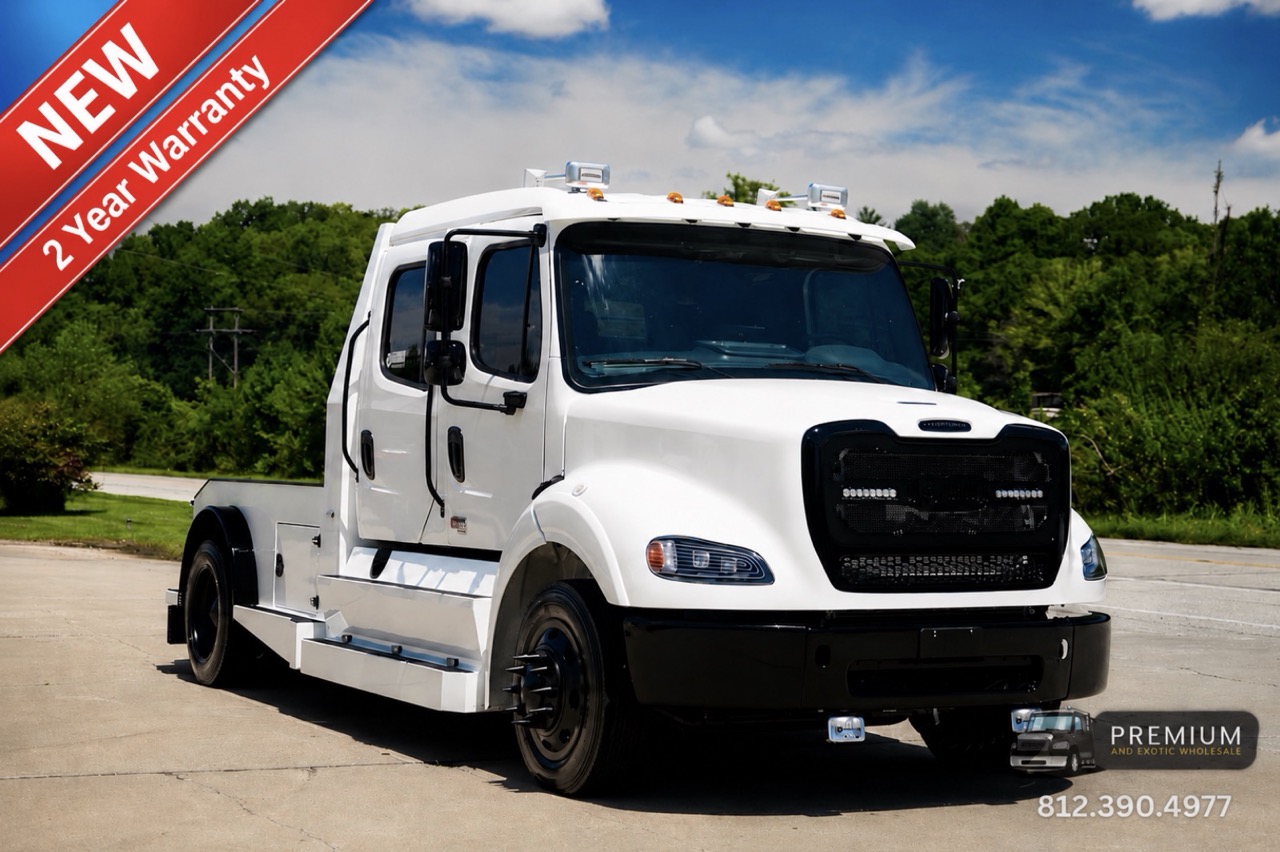
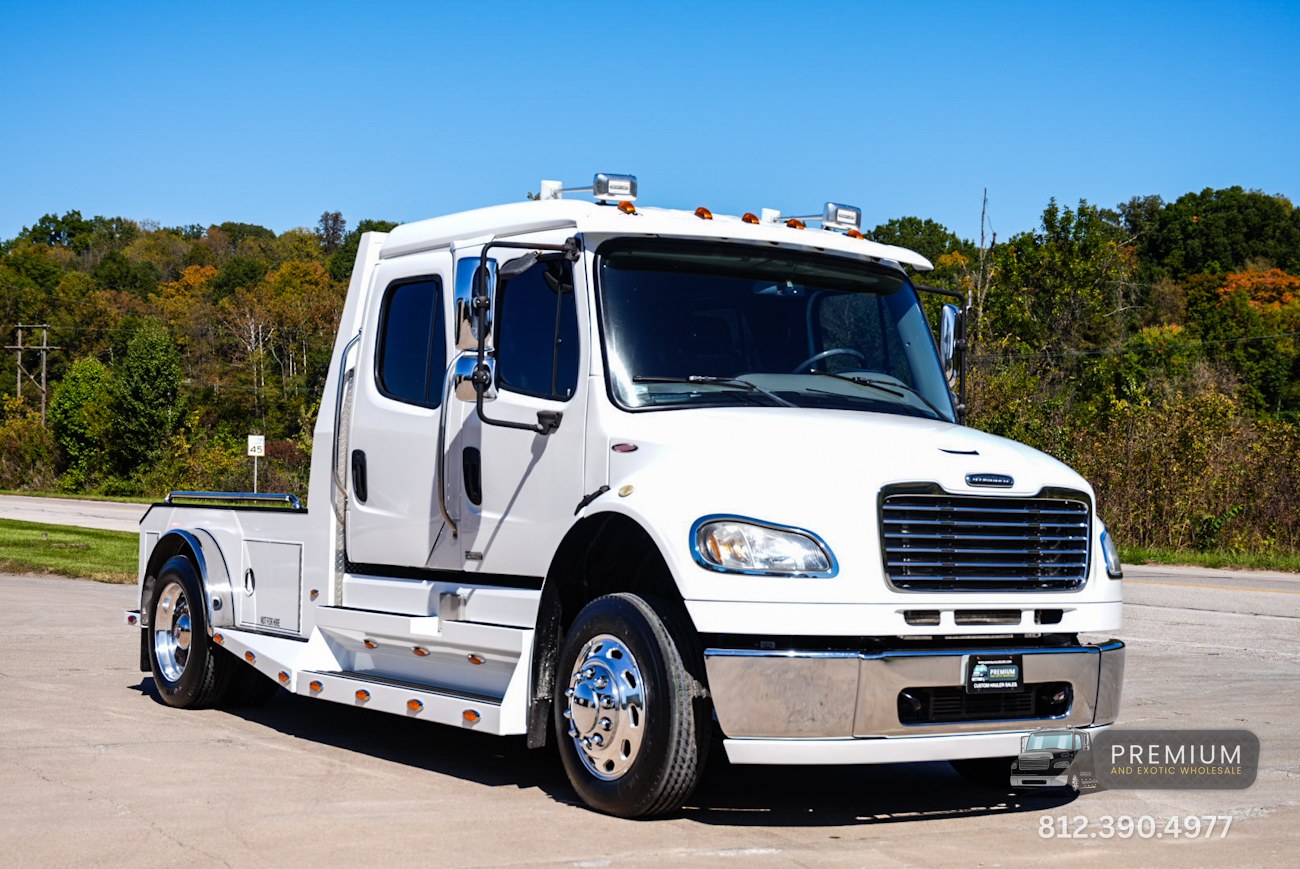
If you have been towing horses with a pickup truck and recently discovered that medium-duty hauler trucks exist, you probably have questions. A lot of them. The weight ratings work differently, the braking systems are unfamiliar, and the suspension technology is new territory.
This guide covers everything you need to understand before (and after) making the switch from a dually pickup to a medium-duty hauler for your horse trailer. We will walk through the critical weight ratings, explain the mechanical systems that make these trucks superior tow vehicles, and address the practical details of daily use.
Understanding the Weight Ratings
Weight ratings are the foundation of safe towing. Get these wrong, and no amount of truck will save you. Here is what each number means and why it matters for horse trailer towing.
GVWR (Gross Vehicle Weight Rating)
The maximum allowable weight of the truck itself, fully loaded. This includes the truck’s curb weight plus passengers, cargo in the bed, fuel, and the pin weight (or tongue weight) of your trailer sitting on the hitch.
- Dually pickups: 11,500 to 14,000 lbs
- Medium-duty haulers: 19,500 to 33,000 lbs
Why it matters: Your trailer’s pin weight counts against your truck’s GVWR. A large living quarters horse trailer can put 3,500 to 5,500 pounds of pin weight on your hitch. On a dually, that might be 40-60% of your total payload capacity. On a medium-duty hauler, it is 20-35%.
GCWR (Gross Combined Weight Rating)
The maximum allowable weight of the truck plus the trailer plus everything in both. This is the ceiling for your entire rig.
- Dually pickups: 35,000 to 43,000 lbs
- Medium-duty haulers: 40,000 to 52,000 lbs
Payload Capacity
The weight you can add to the truck beyond its curb weight. Passengers, pin weight, hay in the bed, saddles, feed, water, tools. It all counts.
Pin Weight (Fifth Wheel) and Tongue Weight (Bumper Pull)
The downward force your trailer exerts on the hitch point. For fifth wheel horse trailers, this is typically 18-25% of the trailer’s loaded weight. For a 24,000-pound loaded trailer, that is 4,300 to 6,000 pounds of pin weight.
This is the number that catches dually owners off guard. Many discover they are over their truck’s payload capacity once they account for pin weight plus passengers plus gear.
Fifth Wheel Hitching on a Medium-Duty Hauler
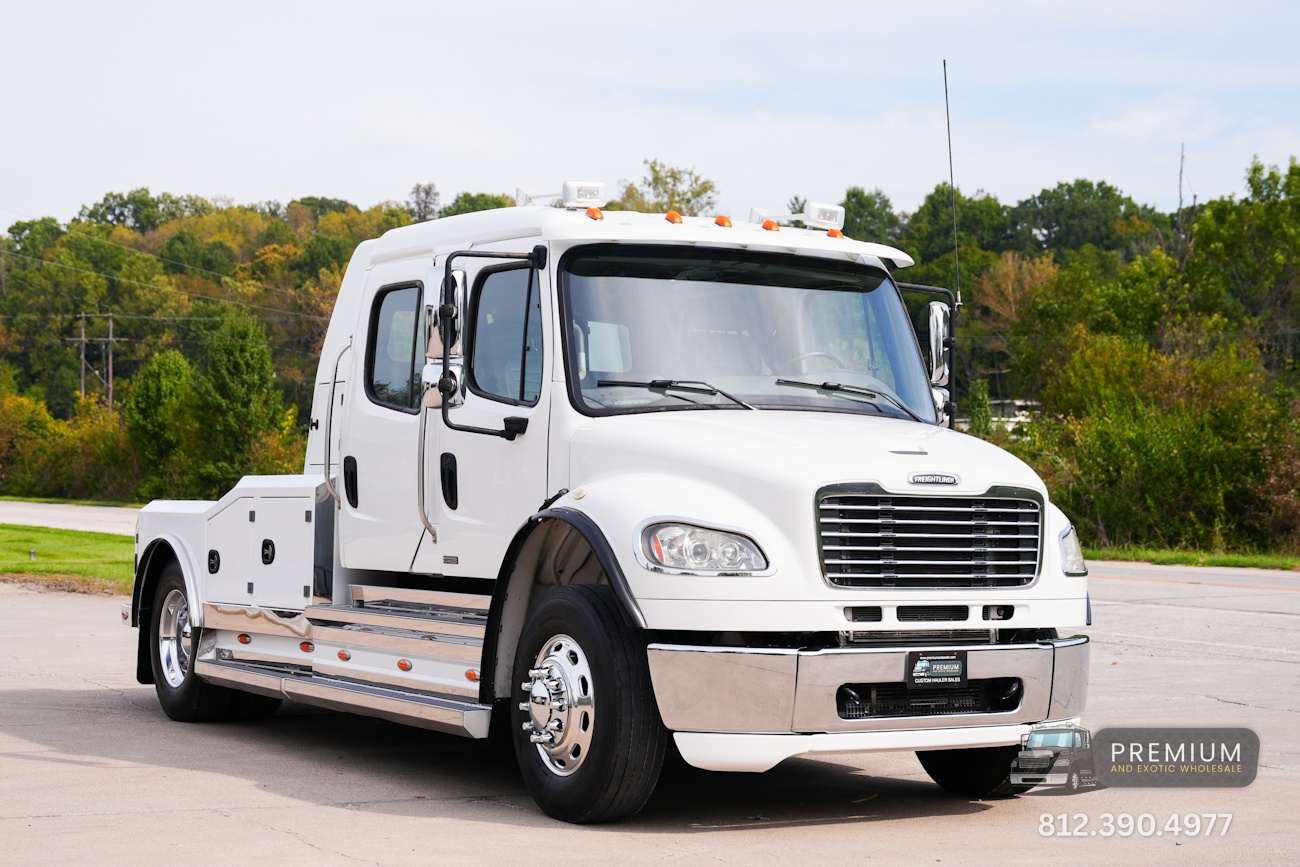
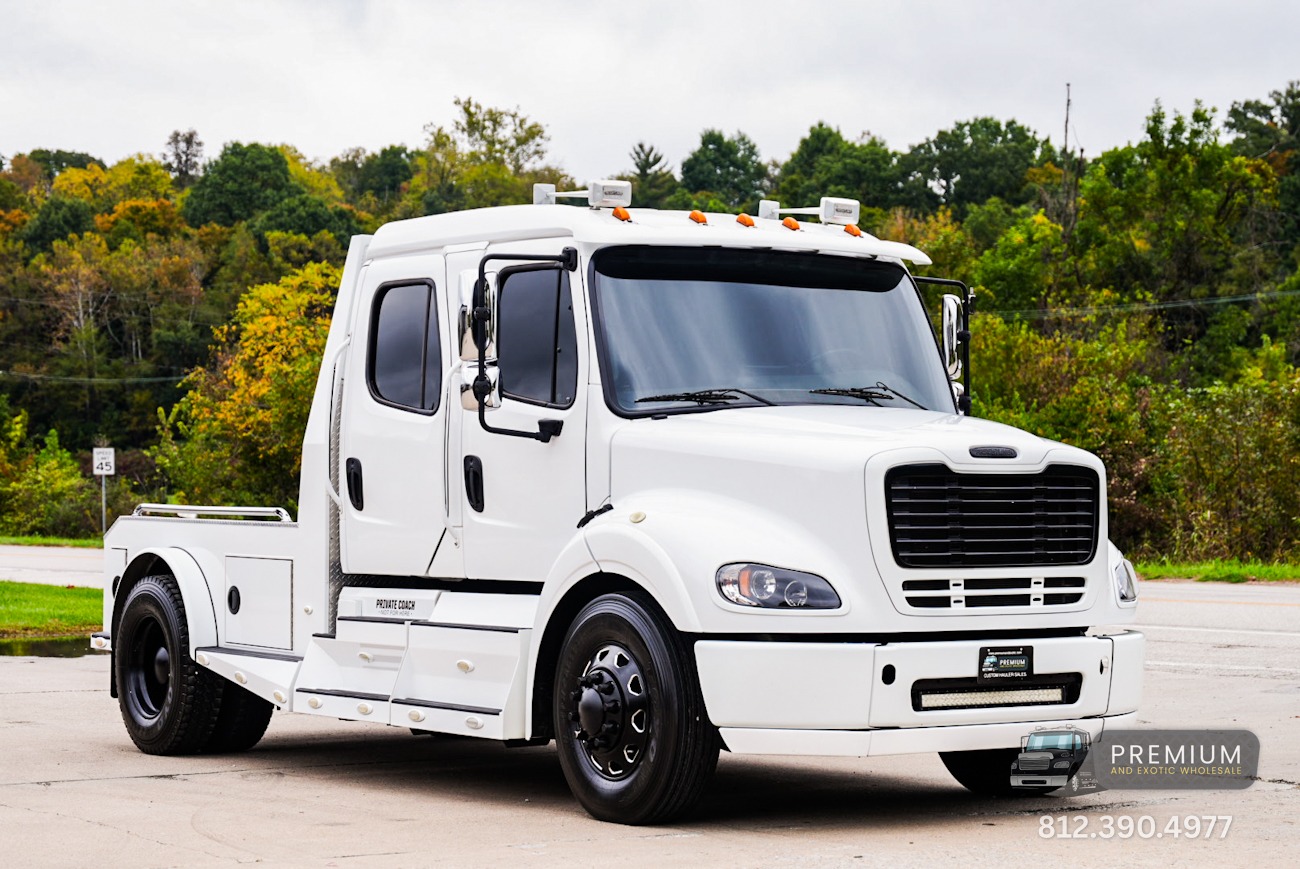
Most serious horse trailers use a fifth wheel (also called gooseneck) hitch. Medium-duty haulers are designed around this connection point.
Hitch Placement
On a medium-duty hauler, the fifth wheel hitch sits in a flatbed or custom bed. The hitch plate is mounted directly to the frame, not to a bed floor that flexes. This direct frame connection provides a more secure, more stable attachment point than a typical gooseneck ball or slider hitch in a pickup bed.
Bed Configuration
Most medium-duty haulers run a flatbed or a short utility bed rather than a traditional pickup bed. This gives you several advantages for horse hauling:
- Lower deck height for easier hitching (many configurations put the hitch plate at a comfortable working height)
- Tie-down points welded to the frame for hay, feed bags, or equipment
- Toolboxes and storage integrated into the bed design
- No wheel wells eating into usable bed space
Hitching Tips
The hitching process is similar to any fifth wheel or gooseneck setup, but the truck’s air suspension adds a useful feature. You can lower the rear air bags to drop the hitch point, connect, and then air the suspension back up to level. This makes hitching to trailers of different heights much simpler.

Air Brakes: The Biggest Safety Upgrade
If there is one mechanical system that separates medium-duty haulers from dually pickups, it is the braking system. Most medium-duty haulers use air brakes, and understanding how they work will change how you think about towing safety.
How Air Brakes Differ from Hydraulic Brakes
Your dually uses hydraulic brakes: fluid pressure applied through brake lines activates calipers or drums at each wheel. The system works well within its design limits but can fade under sustained heavy use (long descents, repeated hard stops).
Air brakes use compressed air to activate brake chambers at each wheel. The system is inherently fail-safe because the brakes are held open by air pressure. If you lose air pressure, the brakes automatically engage (the spring brakes lock). You cannot “run out of brakes” the way you can with hydraulic fade.
Exhaust Brakes and Engine Brakes
Most medium-duty haulers come equipped with an exhaust brake, and some offer a full engine brake (commonly called a Jake brake). These systems use the engine itself to slow the truck on descents, significantly reducing wear on the service brakes.
For horse trailer towing through hilly or mountainous terrain, this is transformative. You can control your speed on a long downgrade without ever touching the brake pedal. Your service brakes stay cool and ready for when you actually need them.
Air Brake Endorsement
If your medium-duty hauler has air brakes, some states require an air brake endorsement on your driver’s license. This is a written knowledge test (not a driving test) that covers air brake operation, inspection, and emergency procedures. It is straightforward to obtain and does not require a CDL.
Suspension Systems for Horse Hauling
Why Suspension Matters for Horses
Horses are standing passengers. Unlike cargo, they must constantly balance against the motion of the vehicle. Rough rides, sudden jolts, and excessive vibration cause stress, fatigue, and in some cases, injury. A smoother ride directly translates to healthier, calmer horses at the destination.
Air Ride Suspension
Most medium-duty haulers feature air ride suspension on both the front and rear axles. The system uses air bags (bellows) instead of leaf springs or coil springs. Benefits include:
- Self-leveling: The truck automatically adjusts ride height based on load. Whether you are running empty or carrying 5,000 pounds of pin weight, the truck stays level.
- Adjustable firmness: Some systems allow the driver to adjust suspension stiffness for different road conditions.
- Vibration absorption: Air suspension absorbs high-frequency road vibrations that leaf springs transmit directly through the frame.
The difference is immediately noticeable. Drivers who switch from leaf-spring duallys to air-ride haulers consistently describe the experience as “floating” compared to their previous truck.

Diesel Engine and Drivetrain Considerations
Medium-duty haulers typically run Cummins diesel engines in the 6.7L to 8.9L range, or similar options from other manufacturers. These are commercial-grade powerplants designed for sustained heavy loads.
Cooling Capacity
One advantage that does not get enough attention: medium-duty haulers have significantly larger cooling systems (radiators, transmission coolers, and intercoolers) than pickup trucks. When you are pulling a 24,000-pound horse trailer through Texas in July, cooling capacity is not optional. It is the difference between steady operation and an overheating truck on the shoulder.
Transmission
Most haulers use Allison automatic transmissions, which are the industry standard for medium-duty commercial trucks. These transmissions are engineered for the torque and load demands that would stress a pickup truck transmission over time.
Practical Considerations
Fuel Economy
Expect 8 to 12 miles per gallon when towing, depending on trailer weight, terrain, and speed. This is comparable to or slightly better than a dually towing the same load, because the medium-duty hauler’s engine is working at a lower percentage of its capacity.
Parking and Maneuverability
Medium-duty haulers are longer than dually pickups (typically 2 to 4 feet longer overall). This matters in tight parking lots and at show grounds. However, many owners find that the longer wheelbase actually makes backing up with a trailer easier and more predictable.
Insurance
Most medium-duty haulers are insured as personal-use vehicles, not commercial trucks. Rates are typically comparable to insuring a high-end dually pickup. Check with your insurance provider, as coverage specifics vary.
Daily Driving
Can you drive a medium-duty hauler to the grocery store? Yes. Should you? That depends on your situation. Some owners use their hauler as a daily driver. Others keep it for towing only and use a separate vehicle for errands. The trucks are perfectly road-legal and comfortable enough for daily use, but they are larger than a pickup and consume more fuel when running empty.
Making the Switch
If you are currently towing a heavy horse trailer with a dually and experiencing any of the following, a medium-duty hauler deserves serious consideration:
- Trailer sway or push in crosswinds
- Brake fade on descents
- Payload capacity concerns (overloaded truck)
- Transmission or engine strain on hills
- Driver fatigue on long hauls
- Horse stress or reluctance to load
The technology exists to solve every one of these problems. Medium-duty haulers were built for exactly this work.
Bring the Numbers
The single most useful thing a horse hauler can do before shopping for a new tow vehicle is run the loaded trailer across a CAT scale. The dry weight on the trailer’s spec sheet is almost never what it actually weighs once horses, hay, water, tack, and living-quarters supplies are aboard. The real number changes the conversation entirely.
When buyers walk into Premium and Exotic with a scale ticket in hand (or even rough weights for trailer, horses, and gear), the team can run the GVWR and payload math right there and match it against specific trucks on the lot. That is how the right hauler gets identified. Not by browsing photos, but by reconciling your trailer’s actual weight with a truck’s actual rating.
Call ahead, share the trailer specs, and the team will have two or three matches pulled by the time you arrive.





You must be logged in to post a comment.